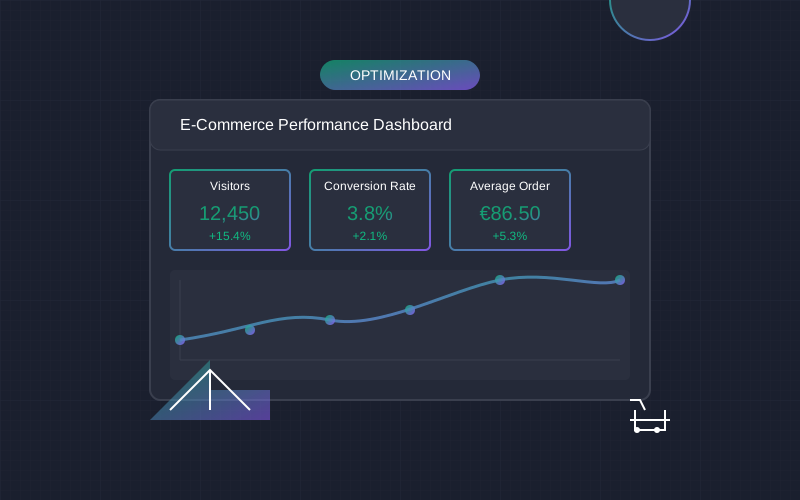
E-commerce in Lithuania is growing rapidly, so it's increasingly important to optimize your online store to compete in this dynamic market. This article covers key e-commerce optimization strategies adapted for the Lithuanian market that will help increase visitor traffic, conversions and sales.
Lithuanian E-commerce Market Overview
Before diving into optimization strategies, it's important to understand the current Lithuanian e-commerce market situation:
- Lithuania's e-commerce market grows on average 15-20% annually
- About 70% of Lithuanians buy products online at least once a month
- Largest sales categories: electronics, clothing, cosmetics and food products
- Over 80% of buyers use mobile devices for shopping
- Most popular payment methods: bank cards, online banking and cash on delivery
These data show that Lithuanian consumers actively use e-commerce services, so businesses need a well-optimized platform.
SEO Optimization for Lithuanian Market
Search engine optimization (SEO) is one of the most important e-commerce success factors. Here's how to adapt it for the Lithuanian market:
- Local keywords: Use Lithuanian keywords with regional variants. For example, not just "sports shoes", but also "sports shoes in Vilnius", "sports shoes in Kaunas", etc.
- Lithuanian meta data: Make sure your meta descriptions, titles and ALT texts are in Lithuanian and optimized for search engines.
- Local links: Include links from trusted Lithuanian websites, social networks and business directories.
- Google My Business: Optimize your Google My Business profile by specifying exact address, business hours and contact information.
- Structured data: Use schema.org markup to provide Google with information about your products, prices and reviews.
User Experience (UX) Optimization
Lithuanian users value convenient user interface and smooth shopping experience. Here are some UX optimization tips:
- Fast page loading: Optimize images, use acceleration technologies and choose a reliable Lithuanian hosting provider.
- Mobile devices: Ensure your website is fully adapted for mobile devices.
- Clear navigation: Create an intuitive category structure that reflects Lithuanian users' shopping habits.
- Localized experience: Adapt currency (EUR), measurement units and language for the Lithuanian market.
- Checkout process: Simplify the checkout process - studies show that Lithuanians often abandon cart if the checkout process is too complicated.
Payment Method Optimization
Lithuanian users use various payment methods. Your e-shop should offer:
- Bank transfers: Lithuanians often use their bank's online banking for payments.
- Card payments: Visa and Mastercard are the most popular cards.
- Cash on delivery: Still a popular choice among older users.
- Electronic payments: PaySera and other local electronic payment solutions.
- Buy now, pay later: "Buy now, pay later" services are becoming increasingly popular in Lithuania.
Delivery Optimization
Delivery services are an important e-commerce aspect in Lithuania:
- Parcel lockers: LP Express, Omniva and DPD parcel lockers are particularly popular throughout Lithuania.
- Courier services: Integrate DPD, Venipak and other courier services.
- Store pickup: If you have physical stores, offer free pickup.
- Delivery costs: Lithuanian users value free delivery - include this option when purchasing for a certain amount.
- Tracking information: Actively provide information about parcel status.
Conclusions
E-commerce optimization for the Lithuanian market requires a comprehensive approach covering SEO, UX, payments, delivery and marketing aspects. It's important to constantly monitor market trends and adapt to changing user needs.
📞 Get in Touch
WebXpert - E-commerce Solutions
📧 info@webxpert.lt
📱 +370 605 13820
💼 LinkedIn
🌐 www.webxpert.lt