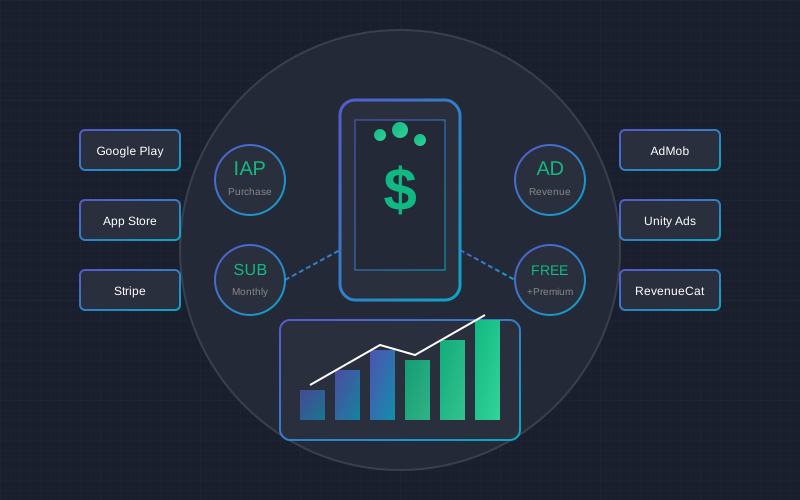
Creating a great mobile app is only half the work. The other half is building a sustainable business model that will not only cover development costs but also generate revenue in the long term. In 2025, the mobile app market reached $935 billion, and competition is more intense than ever. In this article, we'll comprehensively discuss all monetization models, their advantages and disadvantages, and provide practical tips.
Mobile App Market Overview 2025
The mobile app market grows 15-20% annually, and users are increasingly willing to pay for quality services. However, to successfully monetize, you must choose the right monetization model and implement it properly.
Main Monetization Models
1. Freemium Model
Freemium - free basic version with paid features
The most popular model, allowing you to attract many users and convert some into paying customers.
Pros: low entry barrier, large user flow, ability to test before paying
Cons: low conversion (1-5%), requires large user base, difficult to balance free/paid features
The freemium model works best when:
- The app solves a specific problem and provides clear value
- There's a clear line between "good enough" and "much better"
- You can attract many users organically or through advertising
- Premium features truly improve the experience 2-3x
Revenue Calculation Example (Freemium)
100,000 downloads -> 30,000 active users (30% retention) -> 900 premium users (3% conversion) -> $4.99/month price
2. Subscription Model
Subscription - regular payments for ongoing access
Stable, predictable revenue with high customer lifetime value (LTV).
Pros: predictable revenue, high LTV, strong user connection, lower churn
Cons: harder to convert, requires ongoing value, greater pressure to provide new content
The subscription model is particularly effective for:
- Content platforms (news, music, video)
- Productivity tools (notes, projects, automation)
- Health and fitness apps
- Professional tools (design, programming)
| Subscription Type | Typical Price | Conversion | Churn Rate |
|---|---|---|---|
| Weekly | $0.99-2.99 | 4-8% | 50-70%/month |
| Monthly | $2.99-9.99 | 2-4% | 10-20%/month |
| Annual | $19.99-79.99 | 1-2% | 30-50%/year |
| Lifetime | $49.99-199 | 0.5-1% | 0% |
Tip: Encouraging Annual Subscriptions
Offer a 30-50% discount on annual subscriptions compared to monthly. This:
- Increases initial revenue (cash flow)
- Reduces churn (user has "invested")
- Gives time to prove value
Example: $4.99/month = $59.88/year, while annual - $34.99 (42% discount)
3. In-App Purchases
In-App Purchases - one-time purchases within the app
The dominant model in the gaming industry, but also suitable for other categories.
Pros: high ARPU from "whales", flexible pricing, no subscription commitment
Cons: unpredictable revenue, relies on small portion of users, can appear "grabby"
Types of In-App Purchases:
- Consumables - virtual currencies, lives, boosts
- Non-consumables - additional features, content, themes
- Auto-renewable subscriptions - automatically renewing subscriptions
- Non-renewing subscriptions - one-time access for a time period
Game Monetization Example
50,000 DAU (daily active users) -> 2% "whales" (1,000 people) -> average $15/month
+ 48,000 remaining users x $0.30 (ads) = +$14,400/month
4. Advertising Model
Advertising - revenue from displaying ads
Traditional model that allows monetizing all users, not just paying ones.
Pros: monetizes all users, no need to "sell", works immediately
Cons: low CPM, damages user experience, depends on traffic
Ad Formats and Their Effectiveness:
| Format | CPM ($) | Effectiveness | User Experience |
|---|---|---|---|
| Banner | 0.10-0.50 | Low | Neutral |
| Interstitial | 1-5 | Medium | Disruptive |
| Rewarded Video | 5-20 | High | Positive |
| Native Ads | 2-8 | Good | Non-intrusive |
Recommended: Rewarded Video
Rewarded video ads are a win-win situation:
- User gets a reward (life, coins, premium feature)
- You get 10-20x higher CPM than banners
- Engagement rate reaches 70-90%
- Doesn't violate user experience - they choose themselves
5. Paymium (Paid App)
Paymium - one-time payment for the app
Classic model where the user pays once and gets full functionality.
Pros: simple, clear value, no "tricks", loyal users
Cons: high entry barrier, limited revenue, hard to compete with free apps
The paymium model still works in these niches:
- Professional tools - photo/video editing, music
- Productivity - specialized tools
- High-quality games - premium games without ads and IAP
- Privacy - apps where data security is important
Monetization Model Comparison
| Model | ARPU | Conversion | Stability | Best For |
|---|---|---|---|---|
| Freemium | $0.50-3 | 1-5% | Medium | Mass product |
| Subscription | $3-15 | 2-8% | High | Content, tools |
| In-App Purchases | $1-50 | 2-5% | Low | Games |
| Advertising | $0.05-0.50 | 100% | Medium | High traffic |
| Paymium | $2-20 | N/A | One-time | Niche product |
App Store and Google Play Commissions
Important: Store Commissions 2025
Both stores take commission from all digital purchases:
- Standard commission: 30% from all purchases
- Small business program: 15% if annual revenue < $1M USD
- Subscriptions after 1 year: 15% (when user renews subscription)
- News Partner/Video Partner: 15% for qualifying publishers
Impact of Commissions on Revenue
Real Scenario: $10,000 Monthly Revenue
| Scenario | Commission | You Receive |
|---|---|---|
| Standard (30%) | $3,000 | $7,000 |
| Small Business (15%) | $1,500 | $8,500 |
| Subscription 2+ years (15%) | $1,500 | $8,500 |
Difference: $1,500/month = $18,000/year more with reduced commission!
Regional Market Considerations
Pricing for Different Markets
Different markets have specific characteristics that must be considered:
- Purchasing power varies - prices should be adjusted 20-40% based on region
- Price sensitivity - some markets are more likely to wait for discounts
- Loyalty - if the product is good, users become loyal ambassadors
- Local payment systems - integrating regional payment methods increases conversion 15-20%
Recommended Pricing Strategies
- Monthly subscription: $1.99-4.99 for emerging markets, $4.99-9.99 for developed markets
- Annual subscription: $14.99-34.99 to $49.99-79.99 based on region
- One-time purchase: $0.99-2.99 entry-level
- Premium app price: $1.99-4.99 to $9.99-19.99 based on features
Effective Strategies
- Freemium + localized content - localized content increases engagement 40%
- Seasonal promotions - holidays and events - 30-50% discounts
- Referral program - users actively share good products
- Local customer support - native language support = +25% retention
Hybrid Monetization Models
In 2025, the most successful apps combine multiple monetization models:
Popular Combinations:
Freemium + Ads + Ad-free Premium
How it works: Free version with ads, premium - ad-free + additional features
Suitable for: Games, utilities, lifestyle apps
Result: Monetizes both free and paying users
Subscription + In-App Purchases
How it works: Subscription for basic features + additional purchases for content/features
Suitable for: Dating apps, creative tools, educational apps
Result: Stable base + additional revenue from active users
Freemium + Subscription Tiers
How it works: Free -> Basic -> Pro -> Enterprise subscription levels
Suitable for: SaaS, productivity tools, business apps
Result: Different price points for different users
Practical Monetization Tips
1. Start with Value, Not Monetization
First create a product that users will love, then monetize. Not the other way around.
2. Test Prices with A/B Tests
Show different prices to different user groups and measure conversion.
3. Offer a Trial Period
A 7-day trial increases conversion 2x because the user "invests" time.
4. Use Psychological Pricing
- $2.99 instead of $3.00
- Show savings ("Save 40%!")
- Offer 3 options (anchor pricing)
5. Optimize Your Paywall
The paywall screen is the most important conversion point. Test:
- Clear value (3-5 bullet points)
- Social proof (reviews, user numbers)
- Urgency elements (limited time offer)
- Guarantees (money-back)
Revenue Calculation Formulas
Key Metrics
Real Startup Example
Fitness app with subscription model:
- 50,000 downloads over 6 months
- 15,000 active users (30% retention)
- 600 subscribers (4% conversion)
- $3.99/month price
Frequently Asked Questions (FAQ)
Conclusions
Mobile app monetization in 2025 requires a strategic approach and flexibility. There's no single "right" model - the best solution depends on your product, audience, and business goals.
Key takeaways:
- Start with value - monetization follows a quality product
- Test - A/B tests for prices and paywall design
- Combine models - hybrid solutions are often most effective
- Localize - regional market specifics matter
- Measure - track ARPU, LTV, conversion and optimize
With the right strategy and consistent execution, your app can become a sustainable revenue source and grow with your user base.
Need Help with App Monetization?
Contact us for a free consultation. We'll help you choose the optimal monetization model and implement it in your app.
Get Free Consultation