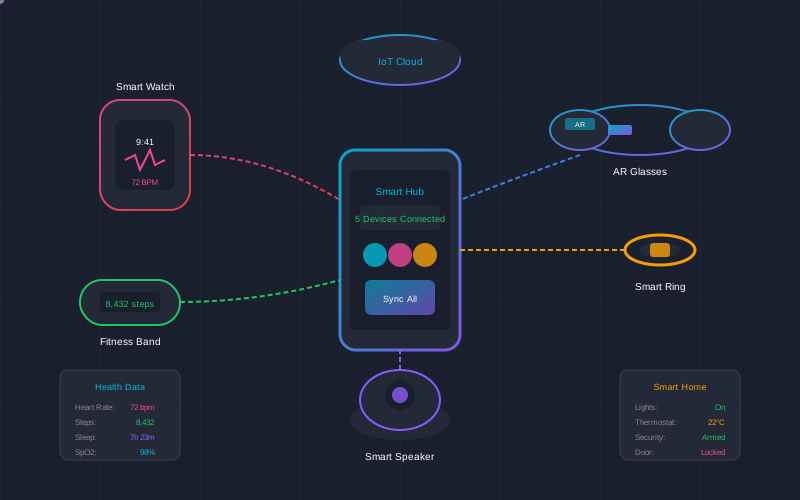
Wearables and IoT (Internet of Things) are transforming our relationship with technology. In 2026, smartwatches, fitness bands, smart home systems, and connected devices have become an integral part of daily life. This article explores how to build applications for this new generation of devices and the business opportunities they present.
Wearables & IoT Market 2026
- Global wearables market: $186 billion (18% annual growth)
- IoT connected devices: 41 billion devices worldwide
- Smartwatch penetration: 38% of UK adults own one
- Smart home adoption: 52% of US households have at least 1 IoT device
Wearables Ecosystem: Platforms and Opportunities
Wearable devices can be categorized into several groups, each offering unique opportunities for app developers.
Smartwatches
The dominant wearables category, offering the broadest opportunities for developers:
| Platform | Devices | Programming Language | Market Share |
|---|---|---|---|
| watchOS | Apple Watch | Swift, SwiftUI | ~55% |
| WearOS | Samsung, Google Pixel Watch, Fossil, TicWatch | Kotlin, Compose for Wear | ~35% |
| Garmin OS | Garmin watches | Monkey C | ~8% |
| Fitbit OS | Fitbit Versa, Sense | JavaScript (SVG) | ~2% |
watchOS Development (Apple Watch)
Apple Watch dominates the premium segment and offers the best integration with the iPhone ecosystem:
- SwiftUI for watchOS: Modern declarative UI framework
- HealthKit: Access to health data (heart rate, steps, sleep)
- Complications: Mini widgets on watch faces
- Watch Connectivity: Data sync between iPhone and Watch
- Always-On Display: Apps can show information even when screen is dimmed
WearOS Development (Android Watches)
Google WearOS (formerly Android Wear) has strengthened after the Samsung partnership:
- Compose for Wear OS: Jetpack Compose adapted for small screens
- Health Services: Unified API for health sensors
- Tiles: Quick access to information (similar to complications)
- Ongoing Activity: Persistent notifications for workouts and navigation
Fitness Trackers and Health Wearables
Simpler devices focused on health monitoring:
- Xiaomi Mi Band / Redmi Band: Budget segment, limited API access
- Fitbit: Proprietary platform with its own SDK
- Whoop: Subscription-based recovery tracker
- Oura Ring: Smart ring with sleep analysis
Earbuds and Audio Wearables
True Wireless earbuds (TWS) have become another wearable platform:
- AirPods: Siri integration, Spatial Audio API
- Galaxy Buds: Bixby and SmartThings integration
- Audio SDKs: Real-time audio processing capabilities
UK Success Story
Babylon Health - A UK healthtech company that has successfully integrated wearables data into their AI-powered health platform. Their app uses HealthKit and Google Fit data to provide personalized health insights and remote consultations.
IoT App Development: Architecture and Technologies
IoT applications typically consist of three layers: devices (edge), cloud infrastructure, and mobile/web interface.
IoT Communication Protocols
| Protocol | Use Case | Range | Power |
|---|---|---|---|
| Bluetooth LE | Wearables, beacons, medical devices | 10-100m | Very Low |
| Wi-Fi | Smart home, cameras, media devices | 50-100m | Medium |
| Zigbee/Z-Wave | Smart home, lighting, sensors | 10-100m (mesh) | Low |
| Thread/Matter | New smart home standard | Mesh networking | Low |
| LoRaWAN | Agriculture, logistics, city sensors | 2-15km | Very Low |
| NB-IoT / LTE-M | Mobile IoT, asset tracking | Cellular coverage | Low-Medium |
Matter Standard - Unifying Smart Home
Matter (formerly Project CHIP) is a new industry standard backed by Apple, Google, Amazon, and Samsung. Its benefits:
- Universal compatibility: One device works with all platforms
- Local control: Works without cloud, faster and more secure
- Thread networking: Low-power mesh network
- IPv6: Every device has a unique address
Cloud Platforms for IoT
Major cloud platforms for IoT solutions:
- AWS IoT Core: Most comprehensive features, MQTT and HTTP support
- Google Cloud IoT: Great BigQuery integration for analytics
- Azure IoT Hub: Enterprise-ready with strong Edge computing
- Arduino Cloud / Particle: For hobbyists and prototyping
Practical Wearable App Development
watchOS App Structure
An Apple Watch app consists of several components:
watchOS App Architecture
- WatchKit App: Main UI and navigation
- Complications: Watch face widgets (up to 8 types)
- Notifications: Rich notifications with custom UI
- Background Tasks: Periodic data updates
- Watch Connectivity: Communication with iPhone app
Design Principles for Wearables
Small screens require a specific approach to UX:
- Glance-able: Information must be understood in 2-3 seconds
- Lightweight interactions: Minimal scrolling, tap-centric design
- Focus on primary action: One main action per screen
- Context awareness: Use time, location, and sensor data
- Battery conscious: Minimal background processing
WearOS Compose Development
Modern WearOS UI is built with Compose for Wear:
- ScalingLazyColumn: Optimized list scrolling for small screens
- Chip/Button: Touch-friendly interactive elements
- TimeText: Standard time display at the top
- PositionIndicator: Scroll position visualization
Smart Home App Development
The smart home segment is growing fastest in the IoT market. Key platforms:
Popular Smart Home Platforms
| Platform | Ecosystem | API Access | UK Market |
|---|---|---|---|
| Apple HomeKit | iOS only | MFi program | Popular |
| Google Home | Android + iOS | Smart Home API | Very Popular |
| Amazon Alexa | Multi-platform | Alexa Skills Kit | Dominant |
| Samsung SmartThings | Multi-platform | SmartThings API | Growing |
| Home Assistant | Open source | Full API | Enthusiasts |
Home Assistant Integration
Home Assistant is the most popular open-source smart home system, offering:
- Local control without cloud dependency
- 2000+ integrations with various devices
- REST API and WebSocket API
- Companion apps for iOS and Android
- Custom dashboard creation
Health Data Integration
Wearables generate abundant health data. How to use it in applications?
HealthKit (iOS/watchOS)
Apple HealthKit provides access to:
- Activity data: Steps, calories, workouts
- Heart data: Heart rate, HRV, ECG
- Sleep data: Sleep stages, duration
- Body measurements: Weight, height, body composition
- Mindfulness: Meditation sessions
Health Data Privacy
Health data is particularly sensitive under GDPR and UK DPA. Requirements:
- Explicit user consent for each data type
- Data minimization - collect only what's necessary
- End-to-end encryption for storage and transmission
- Ability to export and delete data on request
Google Fit API
Android ecosystem's health data platform:
- Recording API: Automatic background data collection
- History API: Access to historical data
- Sessions API: Workout session management
- Goals API: User goal tracking
Industrial IoT (IIoT) Opportunities
Industrial IoT represents the largest market segment by value:
IIoT Application Areas
- Predictive Maintenance: Sensors monitor equipment and predict failures
- Asset Tracking: GPS/BLE tracking in logistics
- Energy Management: Smart grid and energy optimization
- Agriculture: Precision farming, moisture sensors
- Manufacturing: Industry 4.0, robotics integration
UK IIoT Projects
Innovative IoT projects in the UK:
- London Smart City: Air quality monitoring, traffic sensors
- Agricultural IoT: Field sensors, livestock tracking
- Supply Chain: Temperature and location tracking for logistics
- NHS Digital: Remote patient monitoring initiatives
Wearables and IoT Development Costs
| Project Type | Description | Cost (USD) |
|---|---|---|
| Companion Watch App | Simple app that complements phone application | $5,000 - $15,000 |
| Standalone Watch App | Fully functional watch app with sensor access | $20,000 - $50,000 |
| Smart Home App | Custom dashboard and control interface | $15,000 - $40,000 |
| IoT + Mobile App | Custom hardware integration | $30,000 - $80,000 |
| Enterprise IIoT | Complete system with dashboard and analytics | $60,000 - $200,000+ |
Future Trends 2026-2030
Wearables Evolution
- AR Glasses mainstream: Meta, Apple Vision Pro, and competitors
- Non-invasive glucose monitoring: Blood sugar measurement without needles
- Brain-computer interfaces: Neuralink and alternatives
- Smart clothing: Sensors integrated into textiles
- Hearables AI: Real-time translation, health monitoring through earbuds
IoT Evolution
- Edge AI: Machine learning directly on devices
- Digital Twins: Virtual copies of physical objects
- 6G and Satellite IoT: Global coverage everywhere
- Autonomous systems: Self-healing networks
Frequently Asked Questions
Let's Build Your Wearable or IoT Solution
From smartwatch apps to complex IoT systems - we'll help bring your vision to life using cutting-edge technologies.
Discuss Your Project